Medical Management Software Kenya
The Shift Toward Digital Healthcare in Kenya
Healthcare facilities in Kenya are increasingly facing pressure to deliver faster, more accurate, and more efficient services. Many clinics and hospitals still rely on manual systems such as paper records, handwritten prescriptions, and disconnected billing processes, which often result in delays, errors, and poor patient experiences.
As patient numbers grow and expectations rise, healthcare providers are turning to digital solutions to streamline their operations. Medical management software is becoming an essential tool for improving workflow, reducing administrative burden, and ensuring that patient care is handled with precision and consistency.
Today, modern systems are evolving beyond basic record-keeping to include billing, inventory, and reporting in one platform. This shift toward integrated solutions is transforming how clinics, pharmacies, and hospitals operate across Kenya.
1. What is Medical Management Software?

Medical management software is at the heart of modern healthcare systems. It is the technology that allows clinics, hospitals, and pharmacies to move away from slow, paper-based processes and operate in a more efficient, organized, and professional way. In today’s fast-paced environment, healthcare providers are expected to deliver quick, accurate, and reliable services—and this is almost impossible without digital support.
In Kenya, many healthcare facilities are still transitioning from manual systems. You’ll often find reception desks filled with files, patients repeating their medical history, and staff juggling multiple tasks at once. These challenges not only slow down operations but can also affect the quality of care patients receive. Medical management software solves these problems by centralizing everything into one system.
Instead of handling patient records, billing, pharmacy, and reporting separately, this software brings everything together. It ensures that information flows seamlessly from one department to another, reducing delays and improving coordination. Whether it’s a small clinic or a growing hospital, adopting such a system is becoming less of an option and more of a necessity.
1.1 Definition and Core Purpose
Medical management software is a system designed to manage patients, operations, and financial processes within a healthcare facility. It acts as a central platform where all activities—from patient registration to billing—are handled efficiently.
To understand its purpose in real life, imagine two clinics:
In the first clinic, everything is manual. A patient arrives, fills out a form, waits for a file to be created, and then explains their condition to the doctor. After consultation, they carry a handwritten prescription to the pharmacy, and billing is done manually. This process is slow and prone to errors.
In the second clinic, powered by medical software, the experience is completely different. The patient is registered once, their data is stored, and every department can access it instantly. The doctor sees their history, prescriptions are sent digitally, and billing is generated automatically.
The core purpose of medical management software is to:
- Improve efficiency across all departments
- Reduce human errors
- Enhance patient experience
- Provide accurate and real-time data
In simple terms, it transforms healthcare from a manual process into a smart, connected system.
1.2 How It Works in Healthcare Facilities
Medical management software works by connecting every stage of a patient’s journey into one continuous workflow. Each department interacts with the same system, ensuring that information is shared instantly.
Let’s look at a real-life patient journey:
A patient walks into a clinic.
At the reception, their details are entered into the system. If they’ve been there before, their record is retrieved instantly—no need to search for files.
At the doctor’s office, the doctor opens the patient’s profile and sees their full history. This allows for quicker diagnosis and better treatment decisions.
If tests are needed, the lab receives the request digitally. Once completed, results are uploaded directly into the system, ready for the doctor to review.
At the pharmacy, prescriptions appear clearly on the screen. Medication is dispensed accurately, and stock levels are updated automatically.
Finally, at billing, all services are already recorded. The system calculates the total instantly, and the patient pays using cash or M-Pesa.
The entire process is smooth, fast, and coordinated.
Without such a system, each department works independently, leading to delays, miscommunication, and errors. With it, everything flows like a well-organized system where every step connects naturally to the next.
1.3 Difference Between HMIS, EMR, and ERP Systems
When discussing medical management software, three terms often come up: HMIS, EMR, and ERP. While they are related, they serve different purposes within a healthcare facility.
EMR (Electronic Medical Records) focuses on patient data.
This is what doctors use during consultations. It contains medical history, diagnoses, prescriptions, and test results.
For example:
A doctor checks a patient’s previous treatment before prescribing new medication.
HMIS (Hospital Management Information System) covers the entire hospital workflow.
It includes patient records but also handles registration, billing, pharmacy, and reporting.
For example:
A clinic uses HMIS to manage patient flow, process payments, and track services in one system.
ERP (Enterprise Resource Planning) focuses on the business side.
It manages finances, payroll, procurement, and overall administration.
For example:
A hospital administrator tracks staff salaries and expenses using ERP.
Putting It Into Perspective
Think of a healthcare facility like a complete system:
- EMR helps doctors treat patients
- HMIS helps the hospital run daily operations
- ERP helps manage the business side
Modern healthcare systems are now combining all these functions into one integrated platform. This is what makes them powerful—they eliminate duplication, improve efficiency, and ensure that every part of the facility works together seamlessly.
2. Challenges Facing Healthcare Facilities in Kenya

Despite the growth of healthcare services in Kenya, many facilities still struggle with operational inefficiencies that directly affect both patient experience and business performance. These challenges are not always due to lack of effort—but rather the continued reliance on outdated, manual systems that cannot keep up with modern demands.
From small clinics to larger hospitals, the same issues tend to repeat themselves: misplaced patient files, billing inconsistencies, stock shortages, and long waiting times. These problems may seem normal in daily operations, but over time, they lead to serious consequences such as poor patient satisfaction, financial losses, and staff burnout.
Understanding these challenges is important because it highlights why healthcare facilities are now shifting toward integrated digital systems. Let’s break down the most common issues faced in real-life settings across Kenya.
2.1 Manual Record Keeping and Lost Files
In many clinics, patient information is still recorded on paper files. At first glance, this may seem manageable—but as the number of patients grows, the system quickly becomes chaotic.
Imagine a patient returning for a follow-up visit. The receptionist searches through piles of files, only to realize the file is missing or misplaced. The patient is then forced to explain their medical history all over again. This not only wastes time but can also lead to incorrect treatment if important details are forgotten.
Over time, paper records:
- Get damaged or lost
- Are difficult to organize
- Cannot be accessed by multiple departments at once
This creates delays and reduces the overall quality of care. In a busy healthcare environment, relying on physical files simply cannot scale.
2.2 Billing Errors and Revenue Leakage
Billing is one of the most sensitive areas in any healthcare facility. Unfortunately, when done manually, it is also one of the most error-prone.
Consider a scenario where a patient receives consultation, lab tests, and medication. If billing is handled manually:
- Some services may not be recorded
- Prices may be calculated incorrectly
- Receipts may not match services provided
These small mistakes add up over time, leading to significant revenue loss.
In some cases, staff may forget to charge for certain services, or patients may be undercharged due to miscalculations. On the other hand, overcharging can damage trust and lead to complaints.
Without a proper system, it becomes very difficult to:
- Track daily income accurately
- Monitor performance
- Identify financial gaps
This is what is commonly referred to as revenue leakage—money that should have been earned but is lost due to poor systems.
2.3 Poor Pharmacy Stock Management
Pharmacy management is another major challenge, especially in clinics and small hospitals.
Without a digital system, stock is often tracked manually using notebooks or basic spreadsheets. This leads to problems such as:
- Medicines running out unexpectedly
- Overstocking of slow-moving drugs
- Expired medications going unnoticed
For example, a patient may be prescribed medication, only to be told that it is out of stock. This forces them to look for the medicine elsewhere, reducing trust in the facility.
On the other hand, overstocking ties up money in inventory that may not move quickly. Expired drugs also result in direct financial loss.
Effective pharmacy management requires:
- Real-time stock tracking
- Alerts for low stock
- Monitoring of expiry dates
Without these, the pharmacy becomes inefficient and costly to manage.
2.4 Long Patient Waiting Times
One of the most visible challenges in healthcare facilities is long waiting times. Patients often spend hours waiting to be attended, even for simple consultations.
This delay is usually caused by:
- Slow registration processes
- Manual file handling
- Poor coordination between departments
For instance, a patient may wait at the reception, then again outside the doctor’s office, then again at the pharmacy, and finally at billing. Each step operates independently, causing unnecessary delays.
From the patient’s perspective, this experience is frustrating. In many cases, patients may choose to visit another facility next time simply because of faster service.
For healthcare providers, long queues mean:
- Reduced patient satisfaction
- Lower efficiency
- Missed opportunities to serve more patients
2.5 Lack of Real-Time Reporting
Another hidden but critical challenge is the lack of real-time data.
In many facilities, reports are prepared manually at the end of the day or even the end of the month. This means that decision-makers do not have immediate access to important information such as:
- Daily revenue
- Number of patients served
- Stock levels
- Performance of different departments
Without real-time reporting, it becomes difficult to:
- Make quick decisions
- Identify problems early
- Plan for growth
For example, a clinic owner may not realize that a particular service is underperforming or that stock is running low until it is too late.
In today’s fast-moving environment, decisions need to be based on live data, not delayed reports.
Bringing It All Together
All these challenges—manual records, billing errors, stock issues, long queues, and lack of reporting—are interconnected. They stem from one main problem: lack of an integrated system.
When each department operates separately, inefficiencies are inevitable. But when everything is connected through a single system, these challenges can be significantly reduced or eliminated.
This is exactly why many healthcare facilities in Kenya are now moving toward modern, integrated solutions that combine patient management, billing, and inventory into one platform.
3. Key Features of Modern Medical Management Software
To truly understand the value of medical management software, you have to look at what it actually does on a daily basis. Beyond the concept, it’s the features that transform a healthcare facility from a slow, manual setup into a fast, efficient, and well-coordinated system.
In Kenya, where clinics and hospitals handle a high number of patients daily, these features are not just “nice to have”—they are essential. Each one solves a real problem that healthcare providers face every day.
Let’s break them down in a practical, real-life context.
3.1 Patient Records Management (EMR)
At the core of any medical system is the ability to manage patient records digitally.
Instead of keeping physical files, every patient has a digital profile that stores:
- Personal details
- Medical history
- Diagnoses
- Prescriptions
- Lab results
Imagine a patient visiting your clinic for the third time. With EMR, the doctor doesn’t need to ask repetitive questions—they simply open the patient’s record and see everything instantly.
This improves:
- Accuracy in diagnosis
- Continuity of care
- Speed of service
It also eliminates the risk of lost or damaged files, which is very common in manual systems.
3.2 Appointment and Queue Management
One of the biggest frustrations for patients is waiting in long queues. Modern medical software solves this by organizing how patients are scheduled and attended.
With an appointment and queue system:
- Patients can be booked in advance
- Walk-in patients are assigned queue numbers
- Staff can see who is next in line
For example, instead of patients crowding around the reception asking “Who is next?”, the system manages the flow automatically.
This results in:
- Shorter waiting times
- Better patient experience
- More organized operations
It also allows clinics to handle more patients efficiently without chaos.
3.3 Billing and Payment Integration (M-Pesa Ready)
Billing is where many healthcare facilities lose money due to errors or poor tracking. Modern systems solve this by automating the entire billing process.
Every service—consultation, lab test, medication—is recorded in the system as it happens. By the time the patient reaches the billing desk, everything is already calculated.
Even better, the system supports multiple payment methods, including:
- Cash
- Card
- M-Pesa (essential in Kenya)
For example:
A patient completes consultation and pharmacy purchase. Instead of calculating manually, the system generates the invoice instantly, and the patient pays via M-Pesa in seconds.
This ensures:
- Accurate billing
- Faster payments
- Proper financial tracking
3.4 Pharmacy and Inventory Management
Managing a pharmacy without a system can be very challenging. Stock can easily run out, expire, or go untracked.
Medical management software provides real-time inventory control by:
- Tracking stock levels automatically
- Updating inventory when drugs are sold
- Alerting when stock is low
- Monitoring expiry dates
For instance, when a pharmacist dispenses medication, the system immediately deducts it from stock. There’s no need for manual updates.
This helps to:
- Avoid stockouts
- Reduce wastage from expired drugs
- Improve accountability
In the long run, it saves money and improves service reliability.
3.5 Laboratory and Diagnostics Integration
Laboratory processes are often slow when handled manually. Requests are written on paper, results are delayed, and communication between departments is inefficient.
With an integrated system:
- Doctors send lab requests digitally
- Lab technicians receive them instantly
- Results are uploaded directly into the system
This means that by the time the patient returns to the doctor, results are already available.
It’s impact:
- Faster diagnosis
- Reduced waiting time
- Better coordination between departments
It also minimizes errors that come from misreading handwritten notes.
3.6 Reporting and Analytics Dashboard
One of the most powerful features of modern medical software is the ability to generate real-time reports.
Instead of waiting until the end of the day or month, clinic owners and administrators can instantly see:
- Daily revenue
- Number of patients served
- Best-selling medications
- Department performance
For example, a clinic owner can log in and immediately know:
- How much money was made today
- Which services are most popular
- Whether stock is running low
This kind of visibility allows for:
- Better decision-making
- Faster problem-solving
- Business growth planning
Why These Features Matter
Each of these features is designed to solve a real challenge in healthcare facilities. When combined, they create a system that is:
- Faster
- More accurate
- Easier to manage
- More profitable
This is why modern healthcare providers in Kenya are moving toward systems that bring all these features together in one platform—eliminating the need for multiple disconnected tools.
4. Benefits of Medical Management Software in Kenya

When healthcare facilities adopt medical management software, the impact is felt almost immediately—not just by the staff, but also by the patients. What used to be a stressful, slow, and sometimes confusing process becomes smooth, predictable, and professional.
In Kenya, where clinics and hospitals often deal with high patient volumes and limited resources, these benefits are even more significant. It’s not just about technology—it’s about improving how healthcare is delivered every single day.
Let’s explore how these benefits play out in real life.
4.1 Improved Patient Care
At the heart of every healthcare facility is the patient. And one of the biggest advantages of medical management software is how much it improves the overall patient experience.
Imagine walking into a clinic where:
- You don’t have to repeat your medical history
- The doctor already knows your past treatment
- You are attended to quickly without unnecessary delays
This is what happens when patient information is stored and accessed digitally.
Doctors can make better decisions because they have complete and accurate information. They can see past diagnoses, medications, and lab results instantly. This reduces guesswork and improves the quality of care.
It’s impact:
A patient with recurring illness gets consistent treatment because the doctor can track their history over time.
In simple terms, patients feel:
- More confident
- Better understood
- Better cared for
4.2 Increased Operational Efficiency
Behind the scenes, medical management software makes everything run faster and smoother.
In a manual setup, staff spend a lot of time:
- Searching for files
- Writing notes
- Calculating bills
- Coordinating between departments
With a digital system, these tasks are automated or simplified.
For example:
- Registration takes seconds instead of minutes
- Doctors access records instantly
- Billing is generated automatically
This means staff can focus more on patients instead of paperwork.
For impact:
A clinic that used to serve 50 patients a day can now handle 80 or more without increasing staff.
Efficiency doesn’t just save time—it increases the capacity of the entire facility.
4.3 Reduced Medical and Billing Errors
Human error is one of the biggest challenges in healthcare. A small mistake—like misreading handwriting or missing a charge—can have serious consequences.
Medical management software reduces these risks significantly.
For example:
- Prescriptions are typed, not handwritten → no confusion
- Patient data is stored clearly → no misinterpretation
- Billing is automated → no calculation mistakes
For example:
Instead of a pharmacist trying to interpret a doctor’s handwriting, they receive a clear digital prescription.
This leads to:
- Safer treatment for patients
- Accurate billing
- Fewer disputes and complaints
Reducing errors builds trust, which is critical in healthcare.
4.4 Better Revenue Tracking
Many healthcare facilities in Kenya lose money without even realizing it. This happens through:
- Missed charges
- Incorrect billing
- Poor record keeping
Medical management software solves this by tracking every transaction.
Every service provided is recorded automatically, and every payment is logged. This makes it easy to see:
- Daily income
- Services generating the most revenue
- Outstanding balances
It’s impact:
A clinic owner can check their phone or computer and instantly know how much money was made that day.
This level of visibility helps to:
- Reduce revenue leakage
- Improve financial planning
- Increase profitability
4.5 Data-Driven Decision Making
One of the most powerful benefits of modern systems is access to real-time data.
Instead of guessing or relying on outdated reports, healthcare providers can make decisions based on actual numbers.
For example, a clinic can analyze:
- Which services are most in demand
- Peak patient hours
- Stock movement in the pharmacy
For example:
If data shows that most patients visit in the evening, the clinic can adjust staffing to handle the demand.
This leads to smarter decisions such as:
- Hiring the right number of staff
- Stocking the right medication
- Expanding high-demand services
In today’s world, data is power—and medical management software puts that power in the hands of healthcare providers.
Bringing It All Together
These benefits are not just theoretical—they are experienced daily by clinics and hospitals that have embraced digital systems.
- Patients are happier because they are served faster and better
- Staff are more productive because their work is simplified
- Owners have better control because they can see everything clearly
Ultimately, medical management software transforms healthcare from a reactive system into a proactive, efficient, and patient-centered operation.
5. Why Traditional Systems Are No Longer Enough

For many years, traditional systems have been the backbone of healthcare operations in Kenya. Paper files, manual billing, and basic tools like spreadsheets have helped clinics and hospitals run their daily activities. However, as patient numbers increase and expectations rise, these systems are no longer sufficient.
What once worked for a small clinic handling a few patients a day quickly becomes inefficient when the facility grows. The pressure to deliver faster services, maintain accurate records, and manage finances effectively exposes the weaknesses of manual and disconnected systems.
In today’s environment, healthcare facilities need more than just basic tools—they need smart, connected systems that can handle complexity without slowing down operations. Let’s look at why traditional methods are falling short.
5.1 Limitations of Paper-Based Systems
Paper-based systems are simple to start with, but they become difficult to manage over time.
Imagine a clinic that has been operating for a few years. Thousands of patient files are stored in cabinets, shelves, or even boxes. When a patient returns, staff must manually search through these records, which can take several minutes—or longer if the file is misplaced.
Over time, paper systems face several challenges:
- Files get lost or misplaced
- Records become damaged or unreadable
- Information is not easily shareable between departments
- Storage space becomes a problem
For example:
A patient arrives for follow-up treatment, but their file cannot be found. The doctor has to rely on memory or ask the patient to explain everything again, increasing the risk of incorrect treatment.
Paper systems simply cannot keep up with the speed and accuracy required in modern healthcare.
5.2 Disconnected Tools and Inefficiencies
Some healthcare facilities try to improve by introducing digital tools—but often, these tools are not integrated.
For example:
- Patient records may be stored in one system
- Billing may be done in another
- Inventory may be tracked separately
While this seems like progress, it actually creates a new problem: disconnection.
When systems don’t communicate with each other:
- Staff must enter the same data multiple times
- Errors increase due to duplication
- Processes become slower instead of faster
scenario:
A patient is treated, but the billing system is separate. Staff must manually transfer details from one system to another, increasing the risk of missing charges or making mistakes.
Instead of simplifying operations, disconnected tools create confusion and inefficiency.
5.3 Difficulty in Tracking Revenue and Inventory
Without a unified system, tracking money and stock becomes a major challenge.
In many facilities:
- Revenue is recorded manually or in basic spreadsheets
- Pharmacy stock is tracked in notebooks or separate systems
This makes it difficult to answer simple but critical questions like:
- How much did the clinic earn today?
- Which services are most profitable?
- Which drugs are running low?
It’s impact:
A clinic may run out of essential medication without warning, or lose money because some services were never recorded properly.
Revenue leakage and stock mismanagement are not always obvious, but over time, they can significantly affect the financial health of a facility.
5.4 Need for All-in-One Solutions
All these challenges point to one clear need: an integrated, all-in-one system.
Healthcare facilities today require a solution that can handle:
- Patient management
- Billing and payments
- Pharmacy and inventory
- Reporting and analytics
—all within a single platform.
An all-in-one system eliminates:
- Duplication of work
- Communication gaps between departments
- Errors caused by manual processes
transformation:
Instead of juggling multiple tools, a clinic uses one system where everything is connected. When a patient is treated, billing is updated automatically, stock is adjusted instantly, and reports are generated in real time.
This not only improves efficiency but also gives healthcare providers full control over their operations.
The Reality Today
Traditional systems are not failing because they are bad—they are failing because they are outdated for today’s demands.
Healthcare in Kenya is evolving, and facilities that continue to rely on manual or disconnected systems risk:
- Losing patients due to poor service
- Losing revenue due to inefficiencies
- Falling behind competitors who adopt modern solutions
The future belongs to healthcare providers who embrace integrated, digital systems that simplify operations and improve care.
6. The Rise of Integrated Medical + POS Systems in Kenya
Healthcare in Kenya is changing—and fast. Clinics and pharmacies are no longer just places for treatment; they are also businesses that must manage revenue, stock, and operations efficiently. This shift has created a growing demand for systems that do more than just store patient records.
Traditional medical systems focus heavily on clinical data, while POS systems focus on billing and sales. But in real life, these two worlds are deeply connected. Every consultation leads to billing, every prescription affects inventory, and every transaction impacts the financial health of the facility.
This is why integrated medical + POS systems are becoming the preferred choice. They bring together healthcare operations and business management into one platform—making it easier to run a clinic, pharmacy, or small hospital efficiently and profitably.
6.1 Growing Demand for Hybrid Systems
Healthcare providers are beginning to realize that using separate systems for different functions creates more problems than it solves.
In a typical setup:
- Patient records are managed in one place
- Billing is handled separately
- Pharmacy stock is tracked manually or in another system
This fragmentation leads to inefficiencies, errors, and lost revenue.
Today, clinics and pharmacies want something simpler—a single system that does everything.
Real-life shift:
A pharmacy owner who used to rely on notebooks and a basic POS now wants a system that can also track patient prescriptions and link them directly to sales.
This demand is growing because healthcare providers are looking for:
- Simplicity
- Speed
- Better control
Hybrid systems meet all these needs in one solution.
6.2 Combining Patient Management, Billing, and Inventory
The biggest advantage of an integrated system is how everything works together.
Let’s look at a real-life example:
A patient visits a clinic for consultation.
- The doctor records the diagnosis in the system
- A prescription is issued digitally
- The pharmacy dispenses medication
- The system automatically updates stock
- Billing is generated instantly
Everything happens in one flow—without switching between systems or repeating information.
This integration ensures:
- No missed charges
- No stock discrepancies
- No delays between departments
Compare this to a manual or disconnected setup:
- Staff must re-enter information multiple times
- Errors are more likely
- Processes take longer
With integration, the entire operation becomes seamless.
6.3 Affordable Solutions for Clinics and Pharmacies
One of the biggest misconceptions is that advanced systems are only for large hospitals. In reality, modern solutions are becoming increasingly affordable and accessible—even for small clinics and pharmacies.
In Kenya, many healthcare providers operate on tight budgets. They need systems that are:
- Cost-effective
- Easy to implement
- Simple to use without extensive training
Integrated medical + POS systems are designed with this in mind. Instead of investing in multiple tools, facilities can use one system that handles everything.
The benefit:
A small clinic can manage patient records, billing, and pharmacy stock using a single affordable platform—without needing separate software for each function.
This reduces costs while improving efficiency.
6.4 Scalability for Growing Healthcare Facilities
Growth is the goal of every healthcare provider. A clinic may start small, but over time, it can expand into a larger facility with more patients, staff, and services.
The problem with traditional systems is that they don’t scale well. What works for 20 patients a day may fail when the number grows to 100.
Integrated systems are built to grow with the business.
For example:
- You can add more users as your team expands
- You can handle more patients without slowing down
- You can manage multiple branches from one system
Real-life scenario:
A clinic that starts as a small practice can expand into a multi-branch facility, all while using the same system to manage operations.
This flexibility ensures that healthcare providers don’t outgrow their system—they grow with it.
Why This Shift Matters
The rise of integrated medical + POS systems is not just a trend—it’s a response to real challenges faced by healthcare providers in Kenya.
Facilities that adopt these systems benefit from:
- Better control over operations
- Improved patient experience
- Increased revenue and efficiency
Those that don’t risk falling behind in a competitive and fast-changing environment.
The Bottom Line
Healthcare today is not just about treatment—it’s about efficiency, accuracy, and sustainability.
Integrated systems bring everything together:
- Patient care
- Billing
- Inventory
- Reporting
into one powerful platform.
This is exactly the direction the industry is moving—and the sooner healthcare providers adapt, the better positioned they will be for growth and success.
7. Why Healthcare Facilities Are Choosing Tiwi POS
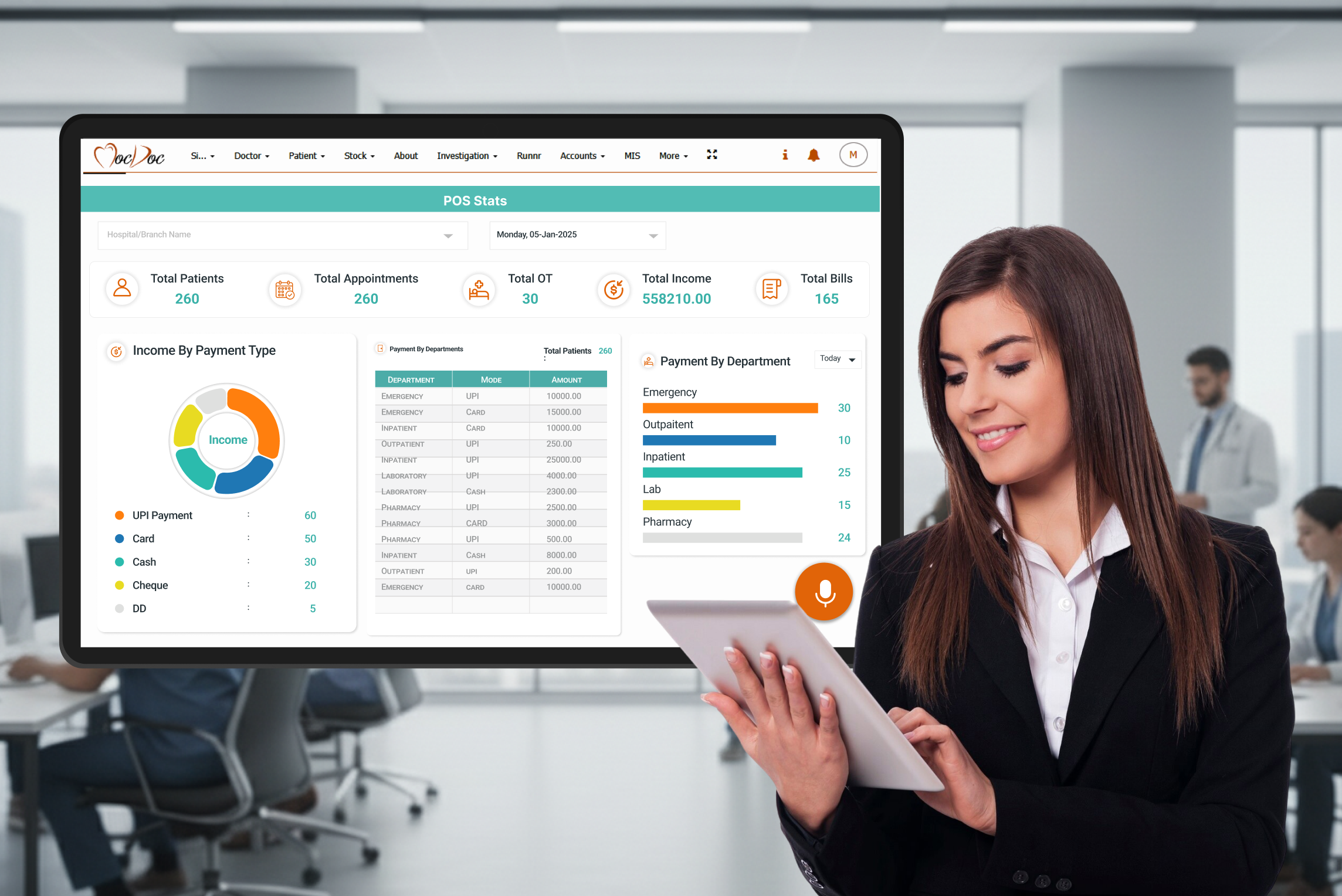
Across Kenya, healthcare facilities are realizing that running a clinic or pharmacy is not just about treating patients—it’s also about managing operations efficiently. From tracking payments to controlling stock and ensuring smooth daily workflows, the business side of healthcare is just as important as the clinical side.
This is where many traditional systems fall short. Some focus only on patient records, while others handle billing separately. The result is fragmented operations, duplicated work, and missed revenue opportunities.
Healthcare providers are now shifting toward integrated, practical solutions that combine billing, inventory, and service tracking into one system. This is why many clinics, pharmacies, and small hospitals are choosing Tiwi POS—a system designed to simplify operations while improving accuracy and control.
7.1 What is Tiwi POS?
Tiwi POS is a smart, easy-to-use system that combines Point of Sale (POS), inventory management, and basic healthcare service tracking into one platform.
Unlike complex hospital systems that require heavy setup and training, Tiwi POS is designed to be practical and accessible—especially for:
- Clinics
- Pharmacies
- Diagnostic centers
- Small to mid-sized hospitals
In real life, this means instead of using:
- One system for patients
- Another for billing
- Another for stock
You use one unified system to handle everything.
It acts as the operational engine of your facility—helping you track services, manage payments, and control inventory without complexity.
7.2 How Tiwi POS Solves Real Healthcare Problems
Many healthcare facilities in Kenya face similar daily challenges. Let’s look at how Tiwi POS solves them in real life:
Problem 1: Billing Errors and Revenue Loss
Manual billing or disconnected systems often lead to undercharging or missed services.
With Tiwi POS:
- Every service is recorded
- Bills are generated automatically
- No revenue is lost
Problem 2: Poor Inventory Management (Especially in Pharmacies)
Stock-outs, expired drugs, or missing items are common when inventory is not tracked properly.
With Tiwi POS:
- Stock is updated in real time
- Alerts help prevent shortages
- You always know what is available
Problem 3: Slow Service Delivery
Manual processes slow down patient flow and increase waiting time.
With Tiwi POS:
- Billing is instant
- Services are recorded quickly
- Workflow becomes faster and smoother
Problem 4: Lack of Business Visibility
Many clinic owners don’t have clear insight into daily sales or performance.
With Tiwi POS:
- You get reports on sales, revenue, and stock
- You can track performance daily
- Better decisions can be made
In short, Tiwi POS doesn’t just digitize your operations—it helps you run your healthcare facility like a well-managed business.
7.3 Key Features of Tiwi POS for Medical Use
Tiwi POS is built with practical features that directly address the needs of healthcare providers:
- Fast Billing System
Generate invoices instantly for consultations, lab tests, and medication - M-Pesa & Multiple Payment Integration
Accept payments easily and track them in real time - Inventory & Pharmacy Management
Monitor stock levels, track sales, and reduce losses - Sales and Revenue Reports
Get clear insights into daily, weekly, and monthly performance - Multi-User Access
Allow receptionists, pharmacists, and managers to use the system with controlled access - Simple and User-Friendly Interface
Easy to learn and use—even for non-technical staff
These features make it especially suitable for facilities that need speed, simplicity, and control without the complexity of large hospital systems.
7.4 Who Should Use Tiwi POS?
Tiwi POS is ideal for healthcare providers who want a practical, affordable, and efficient system.
It is best suited for:
- Clinics
To manage patient services and billing efficiently - Pharmacies
To track stock, sales, and prescriptions - Diagnostic Centers
To handle service billing and reporting - Small and Medium Hospitals
To streamline operations without investing in overly complex systems
Real-Life Fit
If your facility:
- Struggles with tracking payments
- Loses money due to poor billing
- Has issues managing pharmacy stock
- Wants faster service delivery
Then Tiwi POS is not just a tool—it becomes a complete operational solution.
8. Real-Life Use Case: A Clinic Using Tiwi POS

To truly understand the value of Tiwi POS, it helps to step into a real-life scenario. Imagine a typical clinic in Kenya—not a large hospital, but a busy neighborhood facility handling dozens of patients daily.
Before adopting a system like Tiwi POS, the clinic struggled with long queues, missing records, billing errors, and stock issues in the pharmacy. Staff were constantly overwhelmed, and patients often complained about delays.
Now, let’s walk through how that same clinic operates after implementing Tiwi POS.
8.1 Patient Visit and Registration
It’s 9:00 AM, and the first patients are arriving.
Instead of filling out paper forms, the receptionist quickly enters each patient’s details into the system. For returning patients, their records appear instantly—no searching through files, no delays.
You’ll notice something important here:
The conversation at the desk changes.
Instead of asking:
“Have you been here before? Let me check your file…”
It becomes:
“Welcome back. I can see your previous visit—how are you feeling today?”
This small change creates a more professional and reassuring experience for the patient. It also reduces waiting time significantly, especially during peak hours.
8.2 Service Recording and Consultation
When the patient enters the doctor’s room, everything is already prepared.
The doctor opens the patient’s profile and sees:
- Previous diagnoses
- Medications prescribed
- Notes from past visits
This allows the doctor to focus on treatment instead of asking repetitive questions or guessing medical history.
As the consultation continues, the doctor records:
- New symptoms
- Diagnosis
- Recommended treatment
All of this is saved instantly.
In a manual setup, this information might be scattered across different papers or even lost. But here, it’s structured, accessible, and secure.
8.3 Pharmacy Dispensing and Stock Update
After consultation, the patient heads to the pharmacy.
Instead of handing over a handwritten prescription, the pharmacist already sees the medication listed in the system. There’s no confusion, no misinterpretation.
As medication is dispensed:
- The system automatically deducts stock
- The pharmacist can see remaining quantities
- Alerts can help prevent stock-outs
This solves one of the biggest problems in many clinics—uncontrolled inventory.
In the past, the clinic might run out of essential drugs unexpectedly or lose money due to poor tracking. With Tiwi POS, every item is accounted for in real time.
8.4 Automated Billing and Payment Processing
Next, the patient moves to billing.
Here’s where Tiwi POS makes a huge difference.
Instead of calculating everything manually, the system already knows:
- Consultation fees
- Lab charges (if any)
- Medication costs
The total bill is generated instantly.
The cashier simply confirms the amount, and the patient pays using:
- Cash
- Card
- M-Pesa
No delays. No errors. No forgotten charges.
From a business perspective, this is critical.
Every service is captured, every payment is recorded, and revenue leakage is minimized.
8.5 Real-Time Reporting and Tracking
At the end of the day, the clinic owner doesn’t need to guess how the business performed.
With Tiwi POS, they can see:
- Total number of patients served
- Total revenue collected
- Best-selling medications
- Current stock levels
This level of visibility changes how the clinic is managed.
Instead of reacting to problems, the owner can:
- Plan inventory better
- Identify peak hours
- Make informed business decisions
Bringing It All Together
What used to be a stressful, disorganized environment is now smooth, efficient, and predictable.
Patients are served faster.
Staff work with less pressure.
The business runs with more control and transparency.
That’s the real impact of using a system like Tiwi POS—it doesn’t just digitize operations, it transforms how a healthcare facility functions every single day.
9. How to Choose the Best Medical Management Software in Kenya
Choosing the right medical management software is one of the most important decisions a healthcare provider can make. It’s not just about buying a system—it’s about selecting a solution that will support your daily operations, improve patient care, and grow with your facility over time.
In Kenya, where many clinics and pharmacies operate in fast-paced environments, the ideal system must be practical, easy to use, and tailored to local needs. A complicated system may look powerful, but if your staff struggles to use it, it becomes a burden instead of a solution.
Let’s break down the key factors you should consider when choosing the best system for your facility.
9.1 Ease of Use
The first and most critical factor is simplicity.
In a real clinic environment, staff don’t have time to navigate complex dashboards or go through long training manuals. Receptionists, pharmacists, and cashiers need a system they can understand quickly and use confidently from day one.
Imagine hiring a new receptionist.
With a complicated system, they may take weeks to learn basic tasks.
With a simple system, they can start working effectively within hours.
A good medical management system should:
- Have a clean and intuitive interface
- Require minimal training
- Allow staff to perform tasks quickly
This is where systems like Tiwi POS stand out—they are designed for real users, not just technical experts.
9.2 M-Pesa and Local Payment Integration
In Kenya, payment flexibility is not optional—it’s essential.
Most patients prefer paying via M-Pesa, and any system that doesn’t support it will slow down operations and frustrate both staff and patients.
Picture this scenario:
A patient is ready to pay, but your system only supports cash or manual recording. The cashier has to:
- Confirm payment separately
- Record it manually
- Reconcile later
This creates delays and increases the risk of errors.
With proper integration:
- Payments are recorded instantly
- Transactions are tracked automatically
- Reconciliation becomes easy
The best system should support:
- M-Pesa
- Cash
- Card payments
This ensures smooth and efficient payment processing in your facility.
9.3 Inventory and Billing Capabilities
For many clinics and pharmacies, this is where the biggest losses happen.
Without proper inventory and billing systems:
- Drugs go missing
- Stock levels are unclear
- Some services are not billed
- Revenue leaks occur daily
Let’s be honest—this is a common problem.
A strong system should:
- Track every item in your pharmacy
- Update stock automatically when items are sold
- Alert you when stock is low
- Generate accurate bills for every service
For example, when a patient receives:
- Consultation
- Lab test
- Medication
Everything should be captured in one bill automatically.
This is exactly how Tiwi POS helps facilities maintain control—nothing is missed, and everything is tracked in real time.
9.4 Scalability
Your system should grow with your business.
Today, you might be running a small clinic. Tomorrow, you could expand into:
- Multiple branches
- A larger pharmacy
- A diagnostic center
If your system cannot scale, you will eventually need to replace it—and that comes with costs, downtime, and data migration challenges.
A scalable system allows you to:
- Add more users
- Handle more patients
- Expand operations without disruption
Think long-term when choosing your software. It should not just solve today’s problems—it should support tomorrow’s growth.
9.5 Support and Training
Even the best system is useless without proper support.
In real life, issues will come up:
- A staff member forgets how to use a feature
- A report needs clarification
- A technical issue arises
When that happens, you need fast and reliable support.
A good provider should offer:
- Onboarding and initial training
- Ongoing customer support
- Quick response to issues
This is especially important in healthcare, where delays can affect both operations and patient experience.
Final Thought for This Section
Choosing the right medical management software is not about picking the most expensive or the most advanced system—it’s about finding one that fits your daily reality.
You need something that is:
- Simple to use
- Built for the Kenyan environment
- Capable of handling billing and inventory
- Reliable as your business grows
That’s why many healthcare providers are turning to solutions like Tiwi POS—because it focuses on what truly matters: efficiency, control, and ease of use.
10. Future of Medical Management Software in Kenya
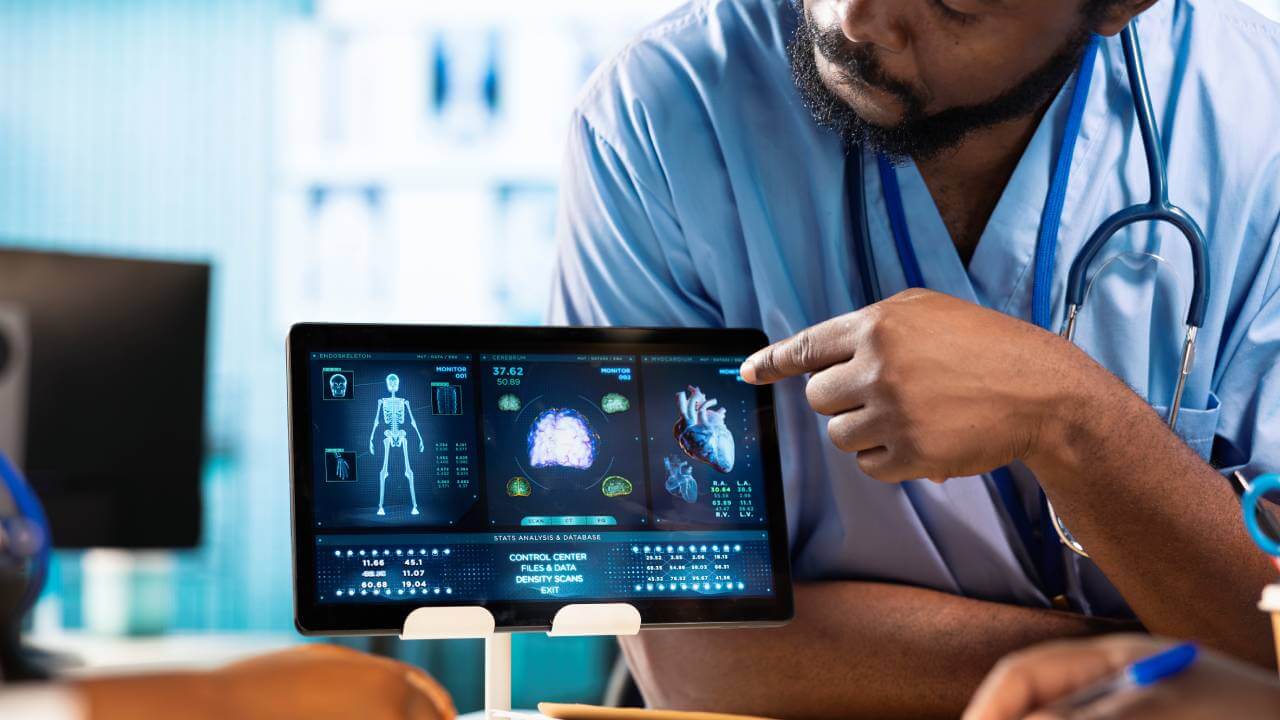
The healthcare sector in Kenya is moving fast—and technology is at the center of that transformation. What we see today is only the beginning. Medical management software is evolving from simple record-keeping tools into intelligent systems that support decision-making, improve patient outcomes, and streamline entire healthcare ecosystems.
For clinics, pharmacies, and hospitals, this means one thing:
the systems you choose today should be ready for tomorrow.
Let’s explore the key trends shaping the future of medical management software in Kenya.
10.1 Cloud-Based Systems
Traditionally, many systems were installed on a single computer within a clinic. This meant that:
- Access was limited to one location
- Data could be lost if the computer failed
- Collaboration between branches was difficult
Cloud-based systems are changing all of that.
With cloud technology:
- Data is stored securely online
- You can access your system from anywhere
- Multiple users can work at the same time
Imagine owning two clinics—one in Nairobi and another in Nakuru.
With a cloud-based system, you can monitor both locations in real time without physically being there.
This also improves:
- Data security (automatic backups)
- Flexibility (work from different devices)
- Scalability (easy to expand operations)
Modern solutions like Tiwi POS are increasingly aligning with this trend, allowing healthcare providers to operate more efficiently and securely.
10.2 Mobile Accessibility
Healthcare is no longer confined to desks and computers.
With mobile accessibility, doctors, pharmacists, and clinic owners can interact with their systems directly from smartphones or tablets.
In real life, this means:
- A doctor can review patient data on a tablet during rounds
- A clinic owner can check daily sales from their phone
- A pharmacist can quickly verify stock without going to the main system
This is especially powerful in Kenya, where mobile technology is widely adopted.
Imagine being away from your clinic but still able to:
- See how many patients were served
- Check total revenue for the day
- Monitor stock levels
Mobile-enabled systems bring control and visibility into your hands—anytime, anywhere.
10.3 AI and Automation in Healthcare
Artificial Intelligence (AI) is beginning to play a bigger role in healthcare systems, even though it’s still growing in Kenya.
In the near future, medical management software will be able to:
- Suggest possible diagnoses based on symptoms
- Flag unusual patterns in patient data
- Predict stock shortages before they happen
- Automate routine tasks like scheduling and reporting
Even without advanced AI, automation is already making a difference.
For example:
- Bills are generated automatically
- Stock updates instantly after a sale
- Reports are created without manual calculations
This reduces workload and allows healthcare professionals to focus more on patients rather than administrative tasks.
Systems like Tiwi POS are already embracing automation by simplifying billing, tracking inventory, and generating reports in real time.
10.4 Integration with National Health Systems
Another major shift is the integration of medical software with national healthcare systems.
In Kenya, this includes:
- NHIF (National Hospital Insurance Fund)
- Digital health records initiatives
- Government reporting systems
In the future, healthcare facilities will need systems that can:
- Submit insurance claims digitally
- Sync patient data securely
- Comply with national health regulations
Imagine a scenario where:
- A patient’s insurance is verified instantly
- Claims are processed automatically
- Reports are submitted directly to regulatory bodies
This level of integration will reduce paperwork, improve transparency, and speed up processes across the healthcare sector.
Looking Ahead
The future of medical management software in Kenya is clear—it is becoming:
- More connected (cloud and integrations)
- More accessible (mobile devices)
- More intelligent (AI and automation)
For healthcare providers, the key is to adopt systems that are not only useful today but also ready for these advancements.
Choosing a flexible and forward-thinking solution like Tiwi POS positions your facility to adapt easily as technology continues to evolve.
11. Common Questions About Medical Management Software
When healthcare providers consider adopting medical management software, a few common questions always come up. Whether you run a small clinic, a pharmacy, or a growing hospital, it’s natural to want clarity before making a decision.
Let’s address the most frequently asked questions in a practical, real-world way.
11.1 What is medical management software?
Medical management software is a system that helps healthcare facilities manage their daily operations digitally. Instead of using paper files and manual processes, everything is handled in one platform—from patient records to billing and inventory.
In simple terms, it allows you to:
- Register patients
- Record consultations
- Manage pharmacy stock
- Generate bills and track payments
Think of it as the system that connects your entire clinic or hospital into one organized workflow.
With solutions like Tiwi POS, this process becomes even more practical by combining healthcare operations with billing and inventory in one easy-to-use platform.
11.2 Can small clinics use it?
Absolutely—small clinics are actually the biggest beneficiaries of medical management software.
Many people assume that these systems are only for large hospitals, but that’s no longer true. In fact, small clinics often struggle the most with:
- Managing patient records
- Tracking payments
- Controlling stock
A simple system can solve all these problems without requiring a large investment or technical expertise.
For example, a small clinic in a residential area can:
- Register patients quickly
- Track daily consultations
- Bill accurately
- Monitor medication stock
Systems like Tiwi POS are designed specifically with this kind of environment in mind—simple, efficient, and easy to use.
11.3 Is it affordable in Kenya?
Yes, medical management software has become much more affordable, especially with the rise of cloud-based and modular solutions.
In the past, such systems were expensive and required heavy infrastructure. Today, many solutions are:
- Subscription-based
- Scalable depending on your needs
- Accessible even to small clinics and pharmacies
The real question is not just the cost—it’s the value.
Consider this:
- How much money is lost through billing errors?
- How much stock goes untracked?
- How much time is wasted on manual processes?
When you look at it this way, investing in a system like Tiwi POS often saves more money than it costs.
11.4 Does it support M-Pesa payments?
Yes—and this is one of the most important features in Kenya.
Since M-Pesa is widely used, any effective system must support it. Without integration, staff are forced to:
- Confirm payments manually
- Record transactions separately
- Reconcile accounts later
This increases workload and creates room for errors.
With M-Pesa integration:
- Payments are recorded instantly
- Transactions are tracked automatically
- Billing becomes faster and more accurate
Modern systems like Tiwi POS are built with local payment methods in mind, making them highly practical for Kenyan healthcare providers.
11.5 How long does implementation take?
Implementation time depends on the complexity of the system, but for most clinics and pharmacies, it is much faster than expected.
For a simple and user-friendly system:
- Setup can take a few hours to a few days
- Staff training can be completed quickly
- Operations can start almost immediately
In many cases, clinics begin using the system the same day or within a very short period.
The key factor is choosing a system that is:
- Easy to install
- Easy to learn
- Supported by a responsive team
This is why many facilities prefer solutions like Tiwi POS, which are designed for quick adoption without disrupting daily operations.
Final Takeaway
Most of the concerns healthcare providers have—cost, complexity, usability—are valid. But with the right system, these challenges are easily addressed.
The goal is not just to adopt technology, but to choose a solution that fits your real-world needs, improves efficiency, and supports your growth.
The Future of Healthcare is Digital and Integrated
Healthcare in Kenya is rapidly evolving, and facilities that continue to rely on manual systems risk falling behind. The need for faster service delivery, accurate billing, and efficient patient management is pushing healthcare providers to adopt smarter digital solutions.
Medical management software is no longer optional—it is essential for improving operations, reducing errors, and enhancing patient care. Integrated systems that combine healthcare workflows with billing and inventory management are becoming the new standard across clinics and hospitals.
If you are ready to modernize your healthcare facility, now is the time to take action. Discover how Tiwi POS can help you streamline operations, improve efficiency, and grow your practice by visiting https://tiwi.co.ke/ today.