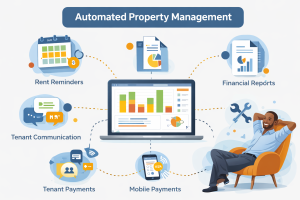
 Property management has traditionally been a hands-on task. Landlords would collect rent in person, keep handwritten records, respond to tenant issues as they came up, and juggle multiple responsibilities daily. While this approach may still work for very small setups, it becomes increasingly difficult as the number of units and tenants grows.
Today, automation is steadily changing how landlords operate. With the rise of digital tools, many of the routine tasks that once required constant attention can now run in the background with minimal effort. This shift is not just about convenience—it’s about creating a more reliable and scalable way to manage property.
In Kenya’s evolving real estate market, where landlords are managing more units and tenants expect faster responses, automation offers a practical way to stay organized and competitive. Instead of reacting to issues as they arise, landlords can put systems in place that handle repetitive tasks automatically.
Benefits
Saves Time
Time is one of the most valuable resources for any landlord. Managing rent payments, tracking expenses, responding to tenant inquiries, and preparing reports can take up a significant portion of your day. When these tasks are handled manually, they often require repeated effort and close attention.
Automation reduces this workload by taking over routine processes. For example, instead of sending rent reminders individually each month, the system does it automatically. Instead of calculating totals for income and expenses, reports are generated instantly.
This allows landlords to focus on more important aspects of their business, such as expanding their property portfolio, improving tenant satisfaction, or planning long-term investments. The time saved can also reduce stress and make property management more manageable overall.
Reduces Errors
Manual processes are prone to mistakes. A missed entry, a calculation error, or a forgotten payment can create confusion and financial discrepancies. These small errors can add up over time, making it difficult to maintain accurate records.
Automation minimizes these risks by ensuring that tasks are performed consistently and accurately. Payments are recorded automatically, reports are generated based on real data, and reminders are sent without being forgotten.
Having accurate information is essential for making sound decisions. When your records are reliable, you can confidently assess your income, track expenses, and plan for the future without second-guessing your numbers.
Improves Efficiency
Efficiency is about getting more done with less effort. In property management, this means handling multiple tasks smoothly without unnecessary delays or complications.
Automation streamlines operations by organizing everything in a structured system. Instead of switching between notebooks, spreadsheets, and phone messages, all your information is stored in one place.
This makes it easier to access data, respond to tenants, and monitor your properties. Tasks that once required multiple steps can now be completed with just a few clicks. Over time, this improved efficiency leads to better productivity and a more professional approach to managing property.
Tasks You Can Automate
Rent Reminders
Following up on rent payments is one of the most repetitive tasks for landlords. Without a proper system, it often involves sending individual messages or making phone calls every month.
Automated rent reminders take this responsibility off your plate. The system can notify tenants before the due date, on the due date, and even after a missed payment. This ensures consistency and reduces the chances of late payments.
Tenants also benefit from these reminders, as they help them stay organized and avoid penalties. It creates a smoother process for both parties.
Reports
Financial reporting is essential for understanding how your property is performing. However, preparing reports manually can be time-consuming and prone to errors.
Automation allows you to generate reports instantly. Whether you need a summary of monthly income, a breakdown of expenses, or an overview of occupancy rates, the information is readily available.
These reports provide valuable insights that can guide your decisions. For example, you can identify which properties are performing well and which ones may need improvement.
Maintenance Tracking
Maintenance is an ongoing part of property management. Without proper tracking, it’s easy for requests to be forgotten or delayed.
Automated systems allow tenants to log maintenance issues, which are then recorded and tracked until they are resolved. This ensures that no request is overlooked.
It also helps landlords prioritize tasks and monitor how quickly issues are addressed. A well-managed maintenance system improves tenant satisfaction and helps maintain the value of your property.
Why Automation Matters in the Kenyan Context
Kenya’s real estate sector is becoming more dynamic, especially in urban areas where rental demand continues to grow. As landlords expand their portfolios, managing properties manually becomes less practical.
At the same time, tenants are becoming more accustomed to digital services. They expect quick responses, convenient payment options, and clear communication. Automation helps meet these expectations while reducing the workload for landlords.
Mobile technology also plays a significant role. With widespread smartphone use and mobile money services, it is easier than ever to integrate digital tools into property management. Automation fits naturally into this environment, making it a practical choice for modern landlords.
Using Keja Tiwi for Automation
Keja Tiwi offers a straightforward way to bring automation into property management. It combines essential features into a single platform, allowing landlords to manage their properties more effectively.
Rent reminders can be scheduled automatically, ensuring that tenants are notified without manual follow-up. Payments are tracked in real time, reducing the need for record-keeping. Financial reports are generated instantly, providing clear insights into your business.
Maintenance tracking is also simplified, with requests logged and monitored within the system. This ensures that issues are addressed promptly and efficiently.
By bringing all these functions together, Keja Tiwi reduces the complexity of property management. It allows landlords to operate more efficiently while maintaining better control over their properties.
Conclusion
Automation is reshaping property management in a practical and meaningful way. It takes over repetitive tasks, reduces the risk of errors, and creates a more organized system for handling daily operations.
For landlords, the benefits go beyond convenience. Automation improves efficiency, saves time, and provides better insights into property performance. It also enhances the experience for tenants by ensuring timely communication and reliable service.
In a growing real estate market like Kenya, relying solely on manual methods can limit your ability to scale and stay competitive. Automation provides a way to manage growth without increasing stress or workload.
Adopting tools like Keja Tiwi is not just about keeping up with trends—it’s about building a more sustainable and efficient approach to property management. As the industry continues to evolve, automation is quickly becoming an essential part of running a successful rental business.
FAQs
Q1: Is automation difficult to set up?
No, most modern property management tools are designed to be easy to use. Setting up automated features typically involves simple steps, and you can start benefiting from them almost immediately.
Q2: Will automation replace the need for human involvement?
Automation handles routine tasks, but human involvement is still important for decision-making, relationship management, and handling unique situations.
Q3: Can small landlords benefit from automation?
Yes, even landlords with a few units can benefit. Automation helps establish efficient systems early and makes it easier to manage additional properties in the future.
Q4: Is automated rent tracking reliable?
Yes, automated systems are designed to record transactions accurately and consistently, reducing the chances of errors compared to manual tracking.
Q5: How does automation improve tenant satisfaction?
It ensures timely communication, quick responses to issues, and a smoother overall experience, which helps build trust and encourages tenants to stay longer.